Welcome to the Bakeshop Collection
Your membership unlocks this library for as long as it remains active.
The Bakeshop Collection is now the primary home for recipe content inside Carter's Bakeshop as of 06/20/2026. There are over 75 recipes currently available, with new recipes added regularly..
Looking for something specific?
Visit Free Content to view what’s available to you at no cost!
For full library access, the stay in the Bakeshop Collection and checkout the Collection Index
For one-time purchases, then shop in the Market. Not every recipe will be available individually in the Market. Collection members receive access to the complete library while the Market contains a rotating selection of individual purchases.
Have questions? First visit the FAQ for downloads, refunds, membership details, and policies
A Growing Recipe Library
Beginning in February 2026, volume measurements were added to most new recipe files as a courtesy. Older recipes may contain metric measurements only, and be in a previous format before we switched to downloadable PDFs. All formulas are developed and tested using metric measurements, which should always be considered the primary and most accurate version of the recipe. For volume conversions, please use a trusted online conversion tool as needed.
Member Perks
25% Off Eligible Market Purchases beginning 07/01/2026
Applies to Vault access, Recipe Audits, and other items not included inside the Bakeshop Collection.
Monthly Member Discount Codes
A new coupon code is sent out the night before the 1st of each month so you always have access to your member discount.
Joined Mid-Month?
If you joined after codes were sent out, simply submit a contact form on the homepage and your code will be provided.
Exclusive Sales & Offers
Members receive more frequent sales and occasional additional discount codes.
Important
Please do not share member codes or sale information. These perks are exclusive to active members and help support the continued growth of this Collection.
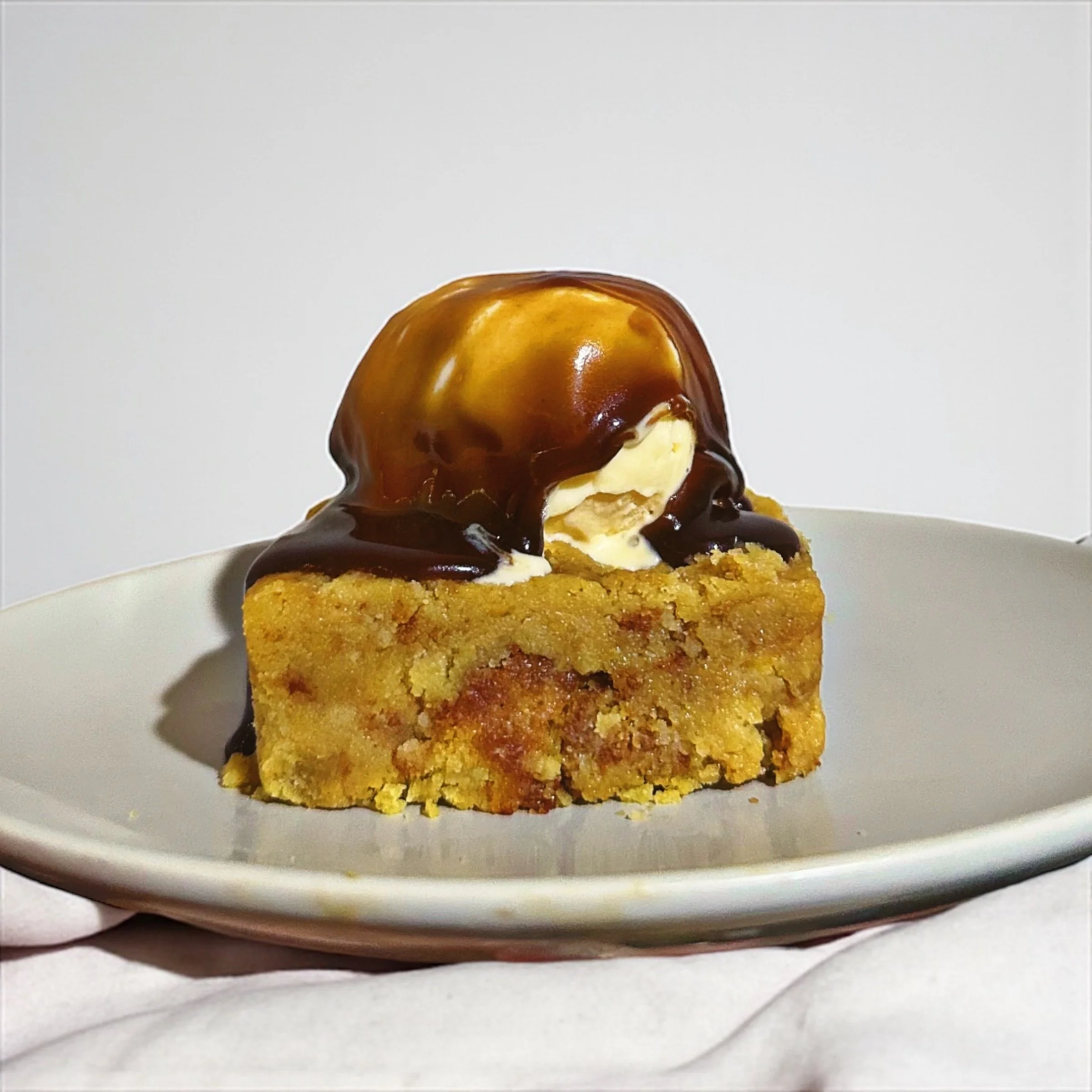
Fireside Corn Pudding à la Mode
Corn pudding has always lived in that delicious space between cake and custard. Traditional versions lean rustic: corn, milk, eggs, and a little starch baked into a soft casserole that you scoop warm at the table. My version takes that familiar comfort and refines it into a plated dessert — part cake, part pudding, and fully indulgent.
Instead of relying only on cornmeal, I simmer and purée sweet corn into a silky base, fold in tender kernels for texture, and bake the batter shallow so it sets custardy rather than bready. Fresh from the oven, the cake is soaked with a brown sugar corn milk to lock in moisture, brushed carefully until every inch glistens. From there, the dessert becomes layered: a warm scoop of pudding collapses into a pool of espresso toffee sauce, paired with a quenelle of brown sugar Chantilly or, in true à la mode fashion, a scoop of ice cream.
Here, “à la mode” means exactly what you’re craving: warm corn pudding served with cold ice cream and sauce. The heat of the pudding melts the ice cream just enough to mingle with the espresso toffee, creating a plate that is both rustic and refined. It’s comfort food, plated like a signature pastry.
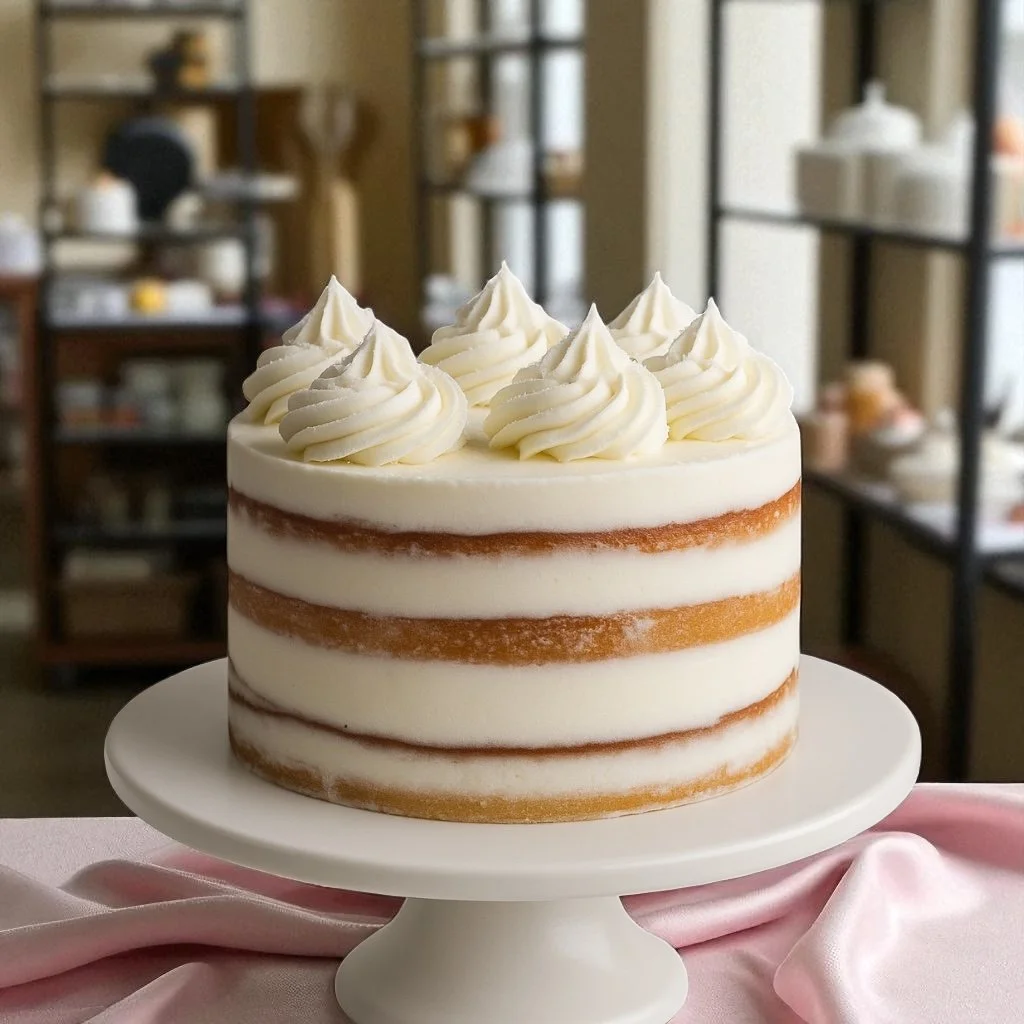
FLUFFY WHITE CAKE
This white cake is not your typical bakery cake. It’s more of a fluffy, cottony, fine-crumb white cake that leans toward the texture of chiffon or Castella. It has a smooth, bouncy structure, a tight and uniform crumb, and a light, clean flavor with a soft vanilla-almond profile.
The crumb is plush and slightly elastic when pressed — not crumbly or rustic. It’s designed to stay soft and moist for days, to slice cleanly for layered celebration cakes, and to pair beautifully with buttercream, whipped cream, or fruit fillings.
If you’ve ever loved the texture of a tender box mix cake or a soft Japanese sponge, this recipe would be enjoyable.
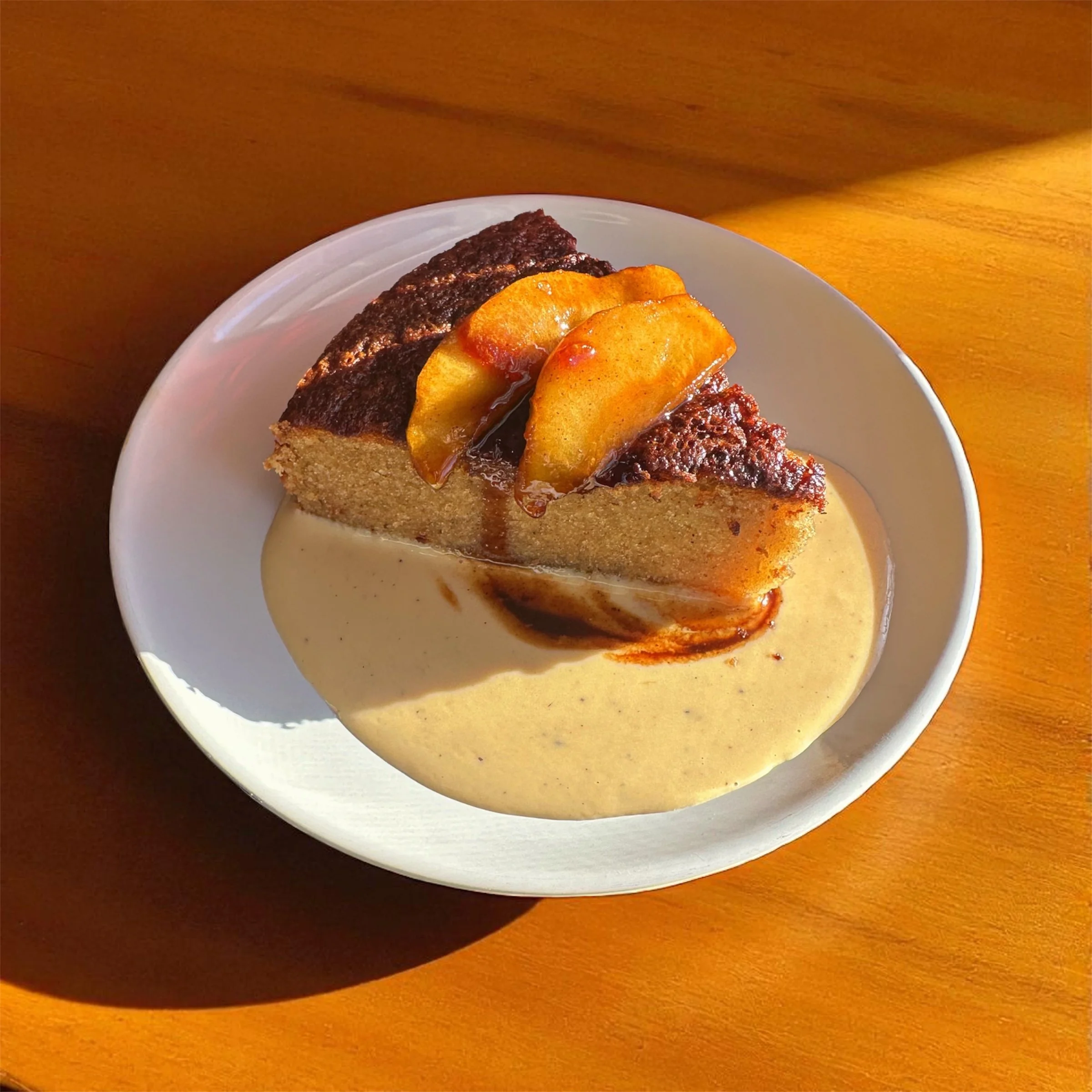
Amberwood Cake
Built on a plush olive oil and brown sugar base, it bakes up with a deep amber hue, a velvety crumb, and a caramelized flavor that doesn’t need to shout to feel indulgent.
This cake is layered in warmth, not complexity. The caramelized apples bring brightness and buttery depth, while the brown sugar crème anglaise provides a silky counterpoint, turning a simple slice into a plated dessert moment. It’s the kind of cake that works just as well on a cozy dessert table as it does in a café pastry case — unfussy but quietly elegant.
The Amberwood Cake is the heart of fall flavor without leaning on heavy spices or overwhelming sweetness. It’s subtle, sophisticated, and rich enough to stand on its own — but irresistible when served warm with cold crème anglaise and glossy apples.

Professional Baker’s Guide to Butter
What to use, when to splurge, how it changes flavor, texture, and performance
Butter isn’t just “fat” in a recipe—it’s structure, aroma, color, and mouthfeel. Choosing the right style (sweet-cream vs. cultured, 80% vs. 84% fat, salted vs. unsalted, grass-fed vs. conventional, European vs. American) will visibly change lamination lift, cookie spread, cake crumb, buttercream stability, ganache texture, and even shelf life. Below is a practical, chef-level guide to the most common butters you’ll encounter in the U.S. and Europe, why professionals reach for each one, and how to adjust formulas to get consistent results.

DIY Pastry Flour
Pastry flour is a soft wheat flour with a moderate protein content, typically around 8–9%, which places it right between cake flour (6–8%) and all-purpose flour (10–12%). This balanced protein level gives pastry flour its unique ability to produce baked goods that are:
Tender and soft without being too fragile
Stable enough to hold delicate shapes and structure
Finely textured for a refined, bakery-style crumb
Unlike cake flour, it has just enough strength to provide structure without toughness. And unlike all-purpose flour, it yields a finer, more melt-in-the-mouth texture.
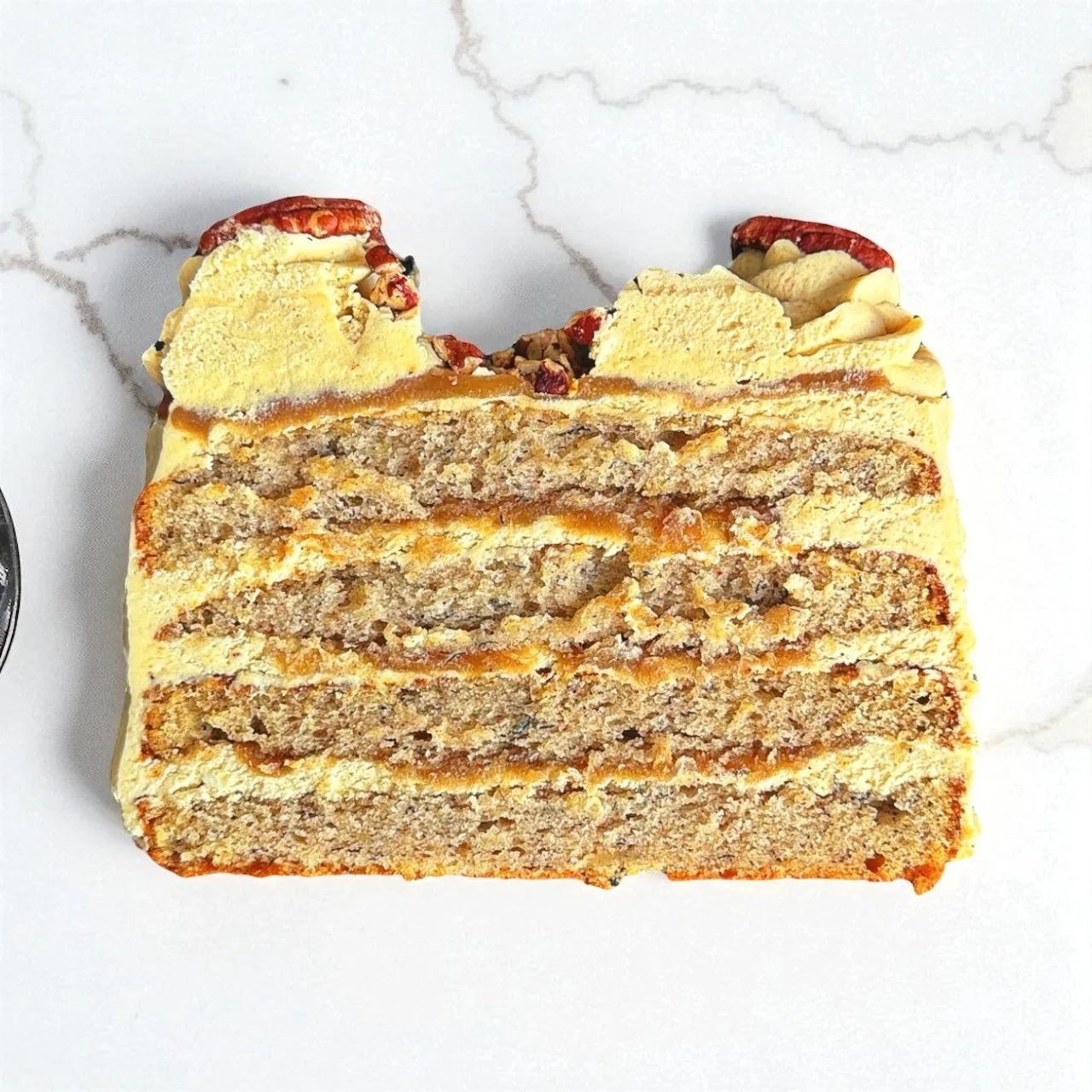
Salted Espresso Banoffee Cake
A plush, velvety, banana-forward crumb with gentle warmth from cinnamon and nutmeg. The layers are moist (not wet), resilient enough to torte thin, and slice cleanly. Salted toffee brings deep caramel notes; the cream-cheese-toffee buttercream is silky, lightly tangy, with a buttery toffee finish. Espresso (if used) reads as a subtle roast note, not coffee cake. At room temperature the crumb feels almost custardy-soft but still stands tall under piped rosettes. Chilled, the build is firm and neat; after 30–45 minutes at room temp, it’s peak serving texture.
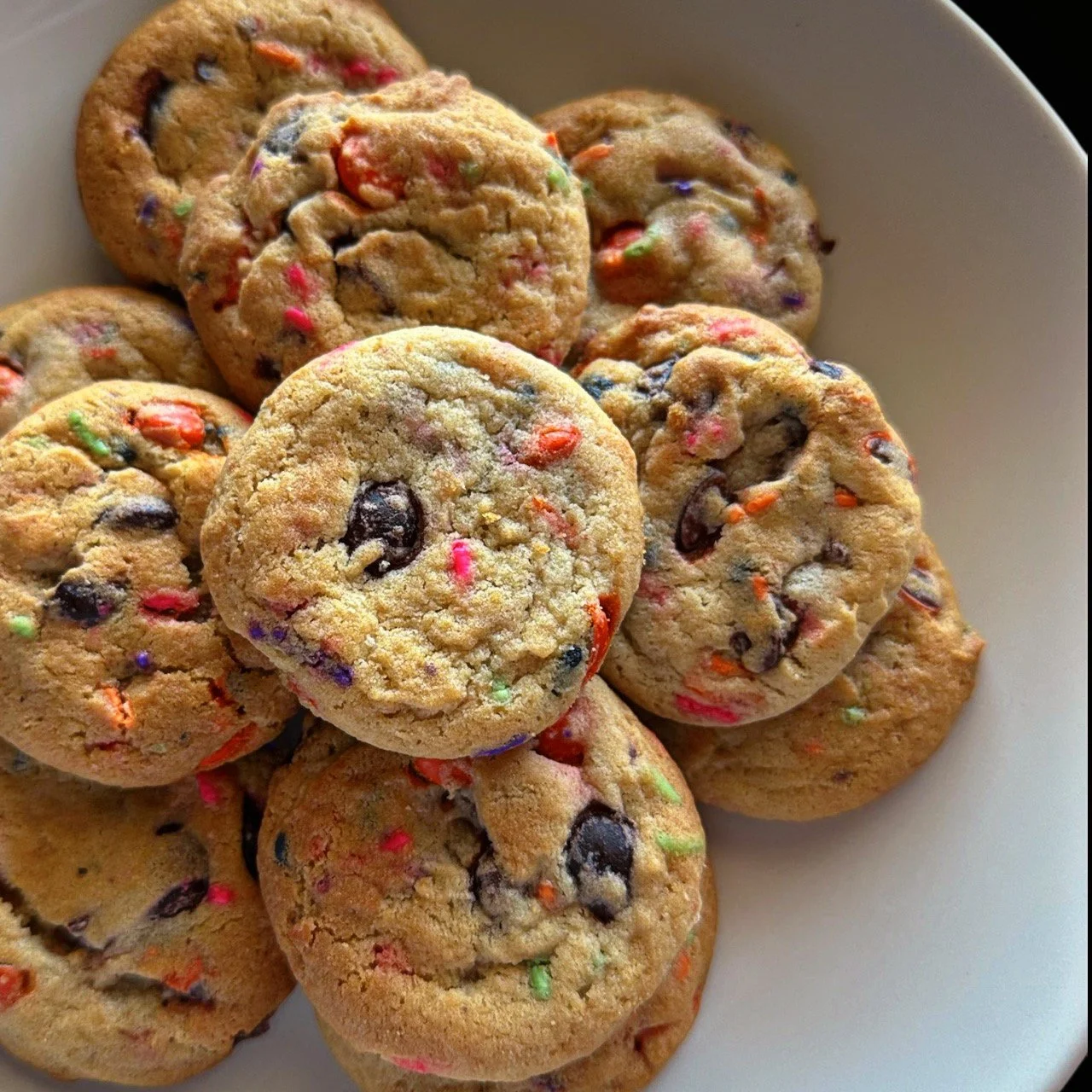
Soft & Chewy M&M Cookies
This M&M bakery cookie was designed to be similar to the nostalgic mall cookie experience while elevating it with a more intentional bakery-style formula. The goal was to create a soft, chewy cookie with a clean candy-forward sweetness, subtle oat undertone, and a shelf-stable texture that holds up beautifully at room temperature.
Think of this as a cross between a Great American–style M&M cookie and a Chips Ahoy! Chewy — but made from scratch with pro bakery technique. It’s not a gooey or crispy cookie. It has a soft, bendy chew, a slight bit of thickness, and a colorful candy top that looks gorgeous on a tray or in a cookie box.

Mimicking Cream Cheese Frosting
For cottage bakers, the reality is that true cream cheese frosting falls under TCS (time/temperature control for safety) — meaning it’s not legally considered shelf-stable in most states.
So how do we recreate that same nostalgic flavor, safely, legally, and convincingly, without using real cream cheese?
Between my own experiments, research, and the feedback I’ve gathered, the consensus has been consistent
The cream cheese emulsion can taste overly sharp or artificial when used in unbaked frostings or glazes, but works fine in small amounts in batters or baked desserts.
The cheesecake emulsion is much smoother and more balanced, especially when paired with vanilla or butter emulsions.
This post is a deep dive into how to build cream cheese flavor from scratch using emulsions, extracts, acid balance, and fat perception. It’s the kind of layered approach that separates professional bakery formulation from the copy-paste recipes floating around the internet.
I’ll also touch on why I don’t recommend cream cheese powder for cottage baking, This topic is touched on in the Cottage “Build Your Own” Glazes and Frosting System, but wanted to make an accessible guide for this as a stand alone.

Deep Dive into Pumpkin Flavor
Every year when pumpkin season rolls in, there’s this rush of recipes, like pumpkin bread, pumpkin cookies, pumpkin cheesecake, but few people stop to ask what “pumpkin flavor” actually is. Is it the pumpkin itself? The spices? The brown sugar? The texture? As a baker, that question is worth unpacking, because pumpkin can be a texture modifier, a moisture agent, and a flavor carrier all at once — and learning how to balance those roles is what separates a good pumpkin bake from a great one.

Quick Guide to Flavoring Desserts
In the professional kitchen, flavoring goes far beyond using vanilla extract. We work with pastes, emulsions, oils, infusions, zests, spices, concentrates, syrups, and natural compounds—each with its own properties, solubility, and impact on texture, structure, and overall sensory experience.
Understanding how flavor interacts with fat, sugar, and liquid systems is what separates a home recipe from a professional one. Below is a guide to the most common types of flavoring used in pastry, how to choose them, and how to adapt based on your formula.