 Image 1 of 1
This recipe is already included in the Bakeshop Collection. This Market listing is for those who prefer to purchase the individual recipe file without a membership.
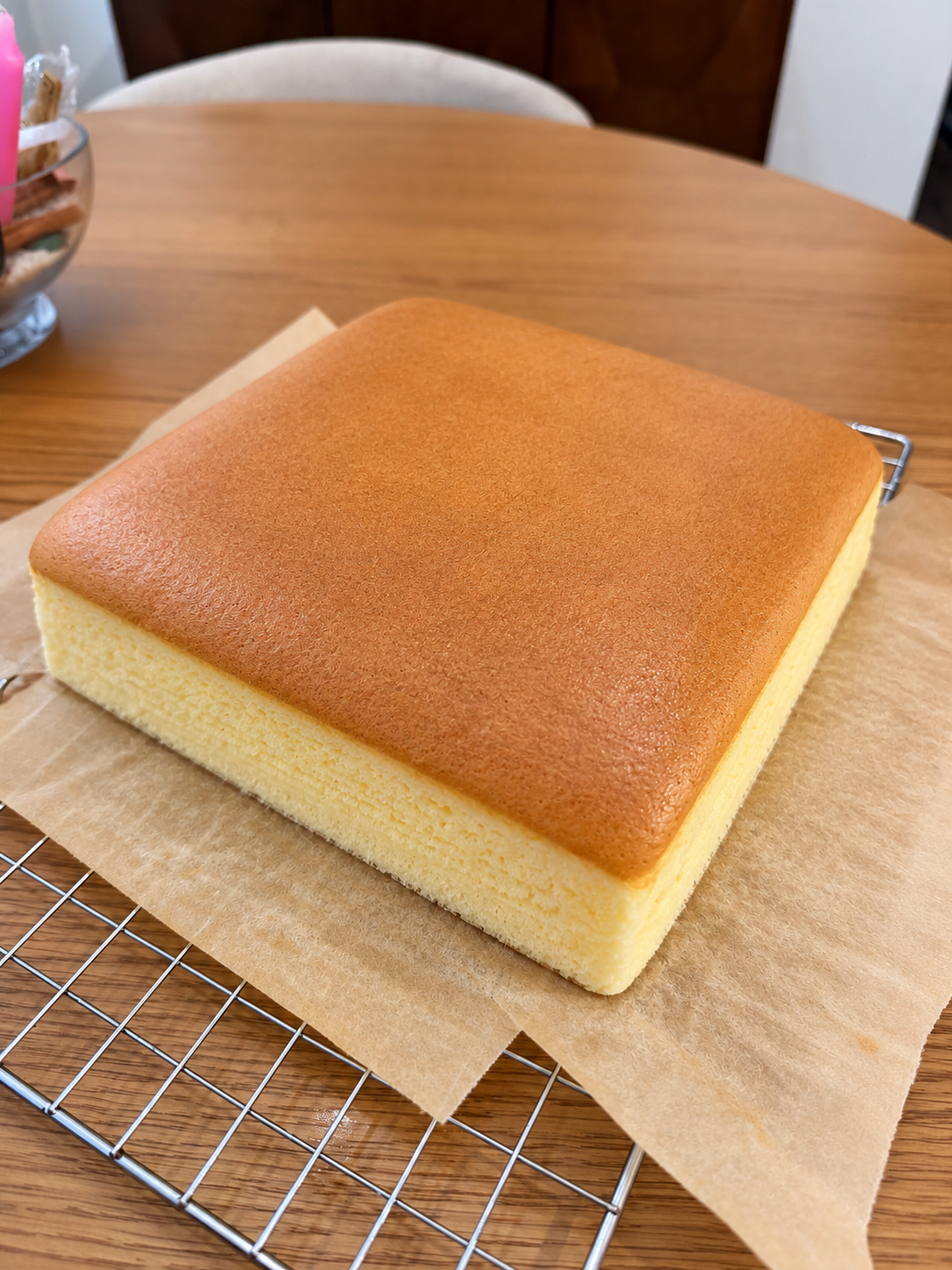
This Taiwanese Cotton Castella is a soft, light, honey-vanilla cake developed for a 9 × 9-inch deep square pan. It has a fine, cotton-like crumb, a delicate pull-apart texture, and a thin, evenly browned top crust. The finished cake should be moist and flexible without feeling wet, gummy, or overly delicate to slice.
Unlike a traditional Japanese castella (kasutera), this is a modern Taiwanese-style foam cake that relies on separately whipped egg whites for much of its volume and structure. The recipe uses a heated-oil flour method, a medium-peak meringue, and a controlled water bath to produce a soft, relatively uniform crumb.
The flavor is built around honey, vanilla bean paste, and dairy. This version is intentionally sweeter than some lightly sweetened cotton castella recipes, but it is not meant to eat like a heavily sweetened dessert cake. It has enough sweetness and flavor to be served on its own without frosting or fillings.
The honey is noticeable to varying degrees depending on the variety used, and while the cake is egg-forward by formulation, the finished flavor is intended to be balanced rather than overwhelmingly eggy.
Yield: One 9 × 9-inch square cake
Pan: 9 × 9-inch deep square cake pan
Development pan load: Approximately 950 g batter
Texture: Soft, moist, fine-crumbed, light, and flexible
Structure: Small, relatively even air cells with some natural vertical elongation in the crumb
Crust: Thin, golden-brown top that may soften slightly as the cake rests
Flavor: Honey, vanilla, dairy, and a mild egg presence
Method: Heated-oil flour mixture, separately prepared meringue, gentle folding, and water-bath baking
Baking: 300°F conventional, approximately 60–70 minutes, with doneness evaluated beyond baking time alone
This six-page PDF includes the complete gram-based recipe with household measurement references, equipment list, mise en place, and step-by-step preparation and baking instructions.
Additional development notes cover meringue consistency, folding technique, expected batter texture, egg flavor, honey selection and intensity, sweetness, crumb structure, and normal changes during cooling.
The file also explains what to look for when evaluating the finished cake, including the difference between normal shrinkage and structural problems such as severe collapse, hollowing, or a dense, wet bottom layer.
Baking guidance includes the development temperature and timing, water-bath preparation, visual doneness indicators, and internal temperature references.
You're looking for traditional Japanese castella (kasutera). This is a Taiwanese cotton castella development with a different formulation, mixing method, fat content, and crumb structure.
You prefer dense, buttery cakes. This is not a pound cake, butter cake, or conventional layer cake. Its texture is much lighter and more delicate.
You want a completely neutral, egg-free-tasting sponge. Although the honey, vanilla, and dairy help balance the flavor, eggs are a significant part of this cake's formulation. Some mild egg flavor is normal.
You're looking for an extremely dry or airy sponge. This cake is intended to retain moisture and have a soft, flexible crumb rather than the drier character of some sponge cakes or the very open structure of angel food cake.
You want a custardy or intentionally underbaked center. The finished cake should be fully set, moist, and tender, without a wet or gummy layer.
You're looking for a quick, low-attention cake method. The result depends on meringue development, controlled folding, batter handling, and water-bath baking. This is a recipe where technique matters.