Gourmet Cookie Base
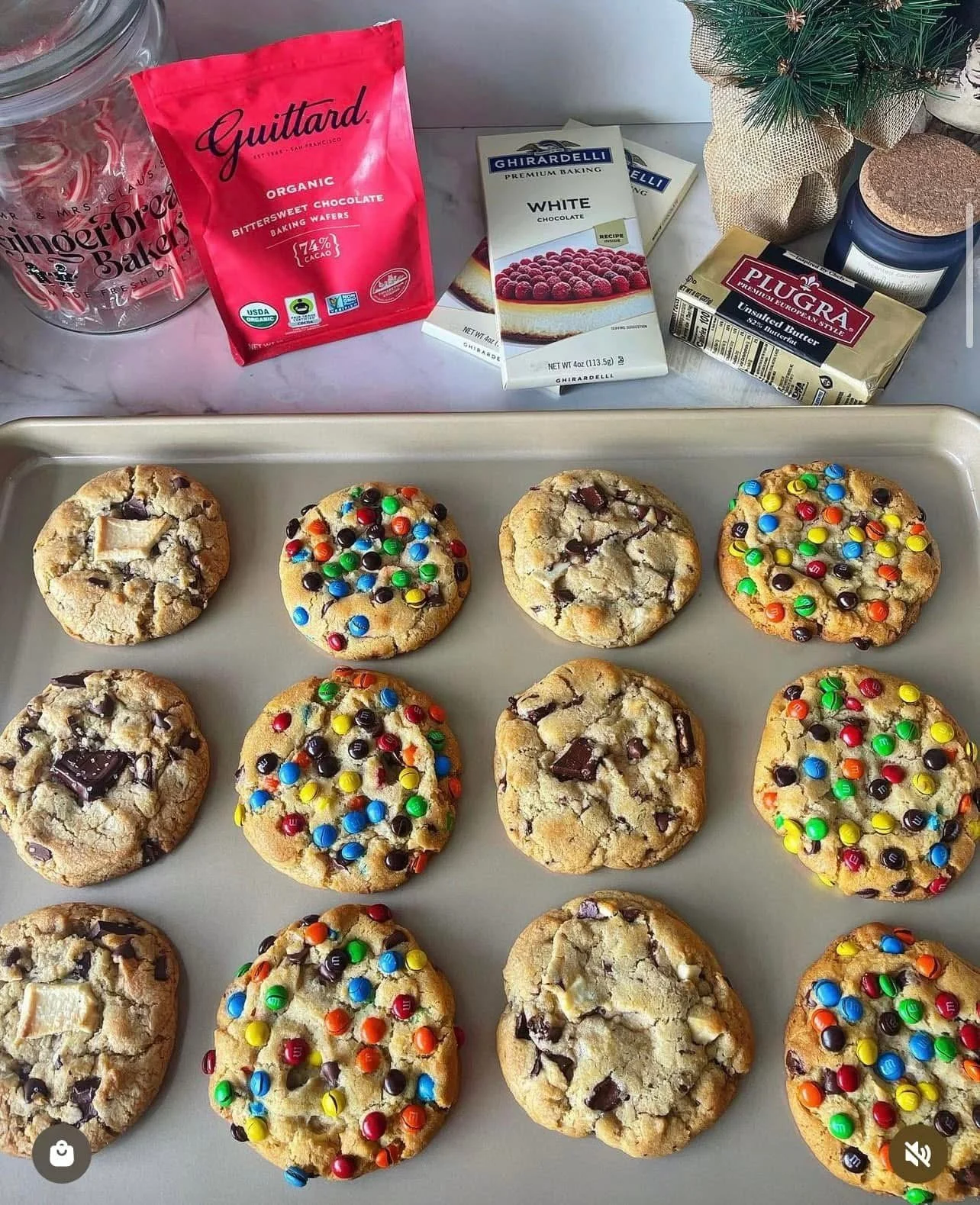
A versatile bakery-style cookie foundation for endless variations
This gourmet cookie base was originally shared inside Carter’s Bakeshop Group as a free working formula and has since become a reliable foundation for bakery-style cookies with a soft, chewy center, lightly crisp exterior, and medium thickness.
This is not intended to be a thin, snappy cookie or a cakey cookie — it is designed to sit comfortably in the middle, making it ideal for chocolate chunk cookies, candy inclusions, filled cookies, or gourmet flavor variations.
The base itself is intentionally neutral, allowing inclusions and fat choices (such as brown butter) to define the final flavor profile.
Notes & Tips
Using Brown Butter in This Cookie Base
This cookie base works exceptionally well with brown butter, but it’s important to understand what brown butter changes and how to use it intentionally rather than casually.
When butter is browned, two things happen:
Milk solids toast, creating nutty, caramelized flavor.
Water content evaporates, reducing total moisture.
Because of this, brown butter should never be treated as a 1:1 swap without thought. This base was tested using partial brown butter, which preserves moisture while still delivering depth of flavor.
Best approach for this recipe: Brown half of the butter, then immediately pour it over the remaining cold butter. This melts and cools the mixture while keeping the final fat content balanced. The result is a butter that creams smoothly and evenly without becoming greasy or overly liquid.
If you brown all of the butter, the dough may feel drier and the baked cookie can lose some chew unless moisture is replaced intentionally.
Moisture Compensation (When Needed)
This dough is designed to naturally balance moisture through eggs, sugars, and flour blend. However, environmental factors matter.
You may need a small moisture adjustment if:
All of the butter is browned
The dough feels crumbly or stiff after mixing
You are baking in a very dry climate
Your flour absorbs more than average
If needed, add 1–2 teaspoons of milk or cream during mixing. This should be just enough to bring the dough together — not enough to loosen it.
Avoid adding extra egg, as that changes structure more than hydration.
Butter Temperature
Whether using plain butter or brown butter, the butter should be:
Soft and creamy
Not cold
Not melted or oily
If the butter is too cold, the sugars won’t dissolve properly.
If it’s too warm, the dough can spread excessively and lose structure.
The ideal butter state is one that presses easily with a finger but still holds shape.
Creaming Style: Creamy, Not Whipped
This recipe is intentionally mixed to a creamy emulsion, not a whipped base.
Proper creaming should look pale, smooth, thick and cohesive
If the mixture looks fluffy like frosting, it has gone too far.
Flour Blend & Texture Control
All-purpose flour provides structure
Cake flour softens the crumb and improves chew
If substituting with all-purpose flour and cornstarch, whisk thoroughly before mixing to ensure even distribution. Uneven blending can cause patchy texture or inconsistent spread.
Do not pack flour when measuring by volume — this dough is sensitive to excess flour.
Inclusion Guidelines
This base is designed to carry inclusions well, but balance still matters.
General guidelines:
200 g inclusions is a good starting point
Up to 250–300 g can be used for heavily loaded cookies
Chop large pieces rather than leaving them oversized
For bakery-style appearance:
Fold inclusions into the dough
Reserve a small amount to press onto the tops of dough balls before baking
This improves both appearance and texture.
Bake Color & Doneness
These cookies are meant to be:
Lightly golden at the edges
Pale and soft in the center
They will continue to set as they cool.
If baked until deeply golden, the cookies will lose their soft interior. Internal doneness is achieved through carryover heat, not extended baking time.
Make-Ahead & Storage Notes
Dough can be refrigerated up to 48 hours
Scooped dough freezes well and can be baked from frozen
Baked cookies store best at room temperature in a loosely covered container
For optimal texture, cookies are best eaten within 24–48 hours.
This cookie base is intentionally versatile.
Flavor depth comes from fat choice, texture comes from mixing and flour balance, and visual appeal comes from portioning and shaping.
Butter
Regardless of butter type:
Butter should be soft but cool
It should cream easily without melting
Use European-style butter for richness and depth
Use American-style butter for structure and consistency
Use partial brown butter for balance
Adjust moisture only when necessary
Gourmet Cookie Base
Ingredients
- 227 g unsalted butter, softened (2 sticks / 1 cup)
- 250 g brown sugar (1¼ cups, packed)
- 150 g granulated sugar (¾ cup)
- 100g eggs + 18 egg yolk, room temperature (2 large + 1 yolk)
- 2 teaspoons vanilla bean paste or extract
- 225 g all-purpose flour (1¾ cups)
- 225 g cake flour (1¾ cups)
- 6g baking soda (1 tsp)
- 5g baking powder (1 tsp)
- 6g fine salt (1 tsp)
- If you do not have cake flour: 450 g all-purpose flour (about 4 cups minus 4 tablespoons) and 40 g cornstarch (4 tablespoons)
- 200 g inclusions (about 1–2 cups, or more to preference)
- Chocolate wafers or chunks
- Chopped baking bars
- Mini or regular candy pieces
- Nuts, toffee, or specialty inclusions
Instructions
- Preheat oven to 175°C (350°F). Line baking sheets with parchment.
- Cream butter and sugars together for 2–3 minutes, until smooth, pale, and creamy.
- The mixture should look cohesive and light, but not fluffy or whipped.
- Add eggs, yolk, and vanilla, mixing until fully combined and emulsified.
- Add dry ingredients and mix just until combined. Do not overmix, stop as soon as no dry pockets remain.
- Fold in inclusions until evenly distributed.
- Portion dough into 100 g portions (about ⅓ cup each).
- For a bakery-style look, roll into balls, break each ball in half, and press the halves back together with the rough edges facing up. Add extra inclusions on top if desired.
- Space cookies a few inches apart and bake for 12–14 minutes, until edges are set and centers look slightly underbaked.
- Cool on the pan for 5–10 minutes before transferring to a rack.
